SummaryAI-written · claude-haiku-5-5AI-written · claude-haiku-5-5Written by a language model from the source data on this page. Not reviewed by a person. Generated 29 Oct 2026.
Openfire, the XMPP server from Ignite Realtime, contains a path traversal flaw in its administrative console's setup environment, which is web-based. An unauthenticated remote attacker, with no user interaction required, can use the unauthenticated setup environment on an already configured server to reach restricted administrative pages in the Admin Console.
Official description · NVDSource dataSource dataCopied from an authoritative feed: NVD, CVE.org, CISA KEV, FIRST EPSS or MITRE CTID mappings, or labelled by the annotators of a published dataset. Copied from NVD.
Openfire is an XMPP server licensed under the Open Source Apache License. Openfire's administrative console, a web-based application, was found to be vulnerable to a path traversal attack via the setup environment. This permitted an unauthenticated user to use the unauthenticated Openfire Setup Environment in an already configured Openfire environment to access restricted pages in the Openfire Admin Console reserved for administrative users. This vulnerability affects all versions of Openfire that have been released since April 2015, starting with version 3.10.0. The problem has been patched in Openfire release 4.7.5 and 4.6.8, and further improvements will be included in the yet-to-be released first version on the 4.8 branch (which is expected to be version 4.8.0). Users are advised to upgrade. If an Openfire upgrade isn’t available for a specific release, or isn’t quickly actionable, users may see the linked github advisory (GHSA-gw42-f939-fhvm) for mitigation advice.
Priority scorePatchfirst’s 0 to 100 ranking. It adds points for CISA KEV listing, ransomware use, EPSS, threat reports, public exploit code and CVSS. Every CVE page shows the breakdown.Breakdown
82.1 / 100
Exploited
Yes, in CISA KEV
Reports
1
Tactics
4/15
How an attack unfolds
Based on MITRE ATT&CKA public catalogue of the techniques attackers use, maintained by MITRE. Patchfirst uses it to describe what attackers do with a vulnerability. mappings. Select a step to see the evidence.
Exploitation timelineDated milestones for a CVE: when it was disclosed, when exploit code became public, when exploitation was confirmed, and when threat reports named it.
First seen exploited 14 days after disclosure. Public exploit code (Metasploit) was available the same day.
CISA KEV listing is when exploitation was confirmed, not necessarily the first attack.
Patch historyEarlier and later CVEs in the same code, in date order. It shows when a fix was bypassed or incomplete and which version finally fixed it.
6 fixes in xmppserver over 6 years. The latest fix listed for xmppserver is 5.0.2.
Fixes in xmppserverMaven package, by fixed version. Earlier and later fixes in the same package, not necessarily the same bug.
MITRE ATT&CKA public catalogue of the techniques attackers use, maintained by MITRE. Patchfirst uses it to describe what attackers do with a vulnerability. techniques
4 TechniqueOne specific attacker behaviour in MITRE ATT&CK, such as T1190 “Exploit Public-Facing Application”. IDs with a dot, like T1059.004, are sub-techniques., grouped by TacticThe attacker’s goal at a stage of an attack in MITRE ATT&CK, such as Initial Access or Persistence. Each technique belongs to one or more tactics. in kill-chain orderSourceSource dataCopied from an authoritative feed: NVD, CVE.org, CISA KEV, FIRST EPSS or MITRE CTID mappings, or labelled by the annotators of a published dataset.4
Source dataSource dataCopied from an authoritative feed: NVD, CVE.org, CISA KEV, FIRST EPSS or MITRE CTID mappings, or labelled by the annotators of a published dataset. CTID Mappings Explorer KEV 07/28/2025 (ATT&CK 16.1); capability: Directory Traversal (Relative and Absolute).MITRE CTID mapping of the KEV entry · primary impact
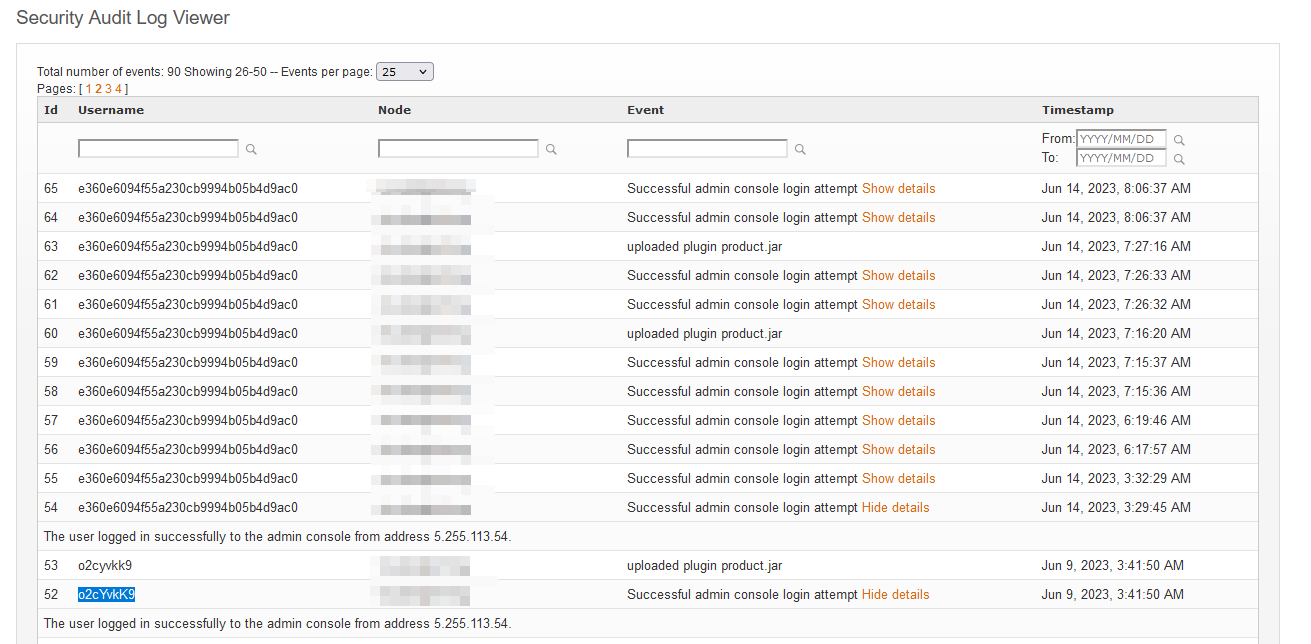
CVE-2023-32315 is a path traversal bug in Openfire's administrative console that could be leveraged for remote code execution. Public reports have indicated that threat actors were exploiting this vulnerability to gain access to the Openfire plugins interface to create new admin console user accounts, install a malicious plugin, and gain access to a webshell.
Source dataSource dataCopied from an authoritative feed: NVD, CVE.org, CISA KEV, FIRST EPSS or MITRE CTID mappings, or labelled by the annotators of a published dataset. CTID Mappings Explorer KEV 07/28/2025 (ATT&CK 16.1); capability: Directory Traversal (Relative and Absolute).MITRE CTID mapping of the KEV entry · how it is exploited
Source dataSource dataCopied from an authoritative feed: NVD, CVE.org, CISA KEV, FIRST EPSS or MITRE CTID mappings, or labelled by the annotators of a published dataset. CTID Mappings Explorer KEV 07/28/2025 (ATT&CK 16.1); capability: Directory Traversal (Relative and Absolute).MITRE CTID mapping of the KEV entry · follow-on activity
Source dataSource dataCopied from an authoritative feed: NVD, CVE.org, CISA KEV, FIRST EPSS or MITRE CTID mappings, or labelled by the annotators of a published dataset. CTID Mappings Explorer KEV 07/28/2025 (ATT&CK 16.1); capability: Directory Traversal (Relative and Absolute).MITRE CTID mapping of the KEV entry · follow-on activity
Detection
0 rules for this CVE · 110 general rules for its techniques
Rules for this CVE
0Sigma ruleAn open, vendor-neutral detection rule for log data. Security teams convert Sigma rules into searches for their own SIEM. that reference CVE-2023-32315 directly.
CVE-specific rules are not available in this build. Search SigmaHQ ↗
General rules for this CVE’s techniques
These detect the technique in general, not this specific vulnerability.
From GitHub Security Advisories and OSVSourceSource dataCopied from an authoritative feed: NVD, CVE.org, CISA KEV, FIRST EPSS or MITRE CTID mappings, or labelled by the annotators of a published dataset. GitHub Security Advisories and OSV.
1 package in 1 ecosystem. Main package: org.igniterealtime.openfire:xmppserver.
Named in 1 threat reportMachineMachine-matchedFound by keyword or pattern matching over threat-report text. Not reviewed by a person. Exact CVE id found in the report text.
1 reportAqua SecurityApr 2020
Reports are matched by finding the exact id CVE-2023-32315 in their text; nobody has reviewed the match. One passage is shown per report, at most 320 characters, linked to the original.
Update (8/27/23) – Aqua Nautilus discovered a new campaign that exploits the Openfire vulnerability (CVE-2023-32315 to deploy Kinsing malware and a cryptominer.